
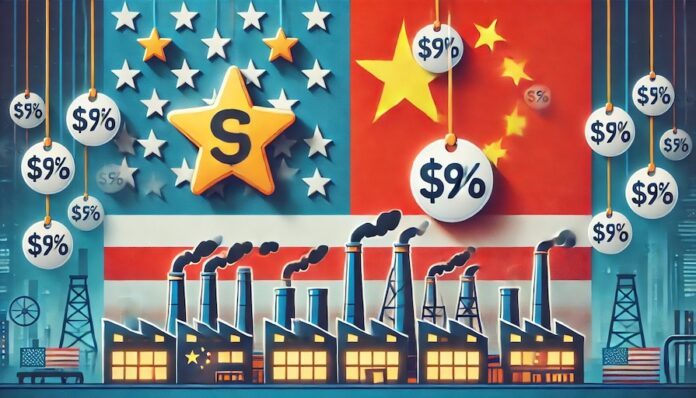
In the early 2000s, the U.S. economy transformed significantly due to a surge in imports from China, a period known as the “China Shock.” This era led to lower consumer prices but resulted in substantial job losses in manufacturing. Former President Trump now proposes a bold plan to counter these effects through an aggressive tariff regime.
Impact on Consumer Prices and Manufacturing Jobs
Trade experts predict that implementing Trump’s tariff plan will significantly increase the price of imported goods. This price rise could have several consequences for the U.S. economy.
The Peterson Institute for International Economics calculated that the proposed tariffs could cost a middle-income household an additional $1,700 per year. Furthermore, economists at Goldman Sachs projected that these tariffs will add 1.1 percentage points to the U.S. inflation rate while reducing GDP growth by 0.5 percentage points. Consequently, the attempt to counteract the economic effects of the China Shock could come with a hefty price tag.
Republican Platform and Trade Policy
The Republican platform embraces protectionist policies similar to those proposed by Trump. It supports baseline tariffs on all foreign-made goods and advocates phasing out essential items imported from China. Trump’s vision includes a 10% tariff on all imported goods and a staggering 60% tariff on Chinese imports. These proposed tariffs are unprecedented in modern U.S. trade history.
Responses from Companies
Companies that rely on imports from China will face several choices if these tariffs are implemented. They might opt to pay the higher tariffs and pass on the increased costs to consumers, potentially reducing demand for their products. Alternatively, they could tolerate lower profitability, although a mix of both strategies is more likely.
Some companies might seek suppliers in countries with lower production costs, such as Vietnam, Thailand, or Mexico. However, the proposed across-the-board tariffs will diminish the attractiveness of this approach. Additionally, rerouting supply chains involves time and higher costs. Another option will be to manufacture goods in the U.S., aligning with the goals of a second Trump administration. This shift will face significant challenges, including time delays, higher wage costs, and a scarcity of qualified workers.
The Legacy of the China Shock
The China Shock had a dual impact on the U.S. economy. While it caused job losses in the manufacturing sector, it also led to a significant decrease in consumer prices for many goods. From December 2001, when China joined the World Trade Organization, to December 2016, consumer prices fell for items such as apparel, furniture, appliances, and toys. This period of deflation contributed to higher real incomes for U.S. consumers.
Expert Opinions
Mary Lovely of the Peterson Institute asserts that it is impossible to undo the China Shock. Instead, any new tariffs will likely shift supply chains to countries other than China. However, this shift will not necessarily benefit American consumers, who will face higher prices.
On the other hand, proponents of Trump’s trade policy argue that higher consumer prices and lower profits are acceptable trade-offs for supporting domestic manufacturing. They believe that economic separation from China is a strategic necessity.
Conclusion
Trump’s proposed tariff regime represents a dramatic attempt to counteract the effects of the early 2000s China Shock. While the plan aims to boost domestic manufacturing, it could lead to higher consumer prices and economic disruptions. The debate over this policy highlights the complexities of balancing trade, economic growth, and national security.
