
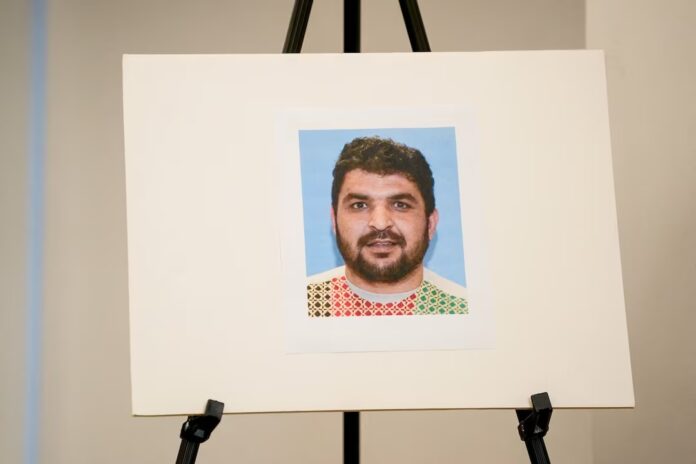
A Deadly Ambush Near the White House
The attack near the White House occurred when an armed man approached West Virginia National Guard members patrolling near a crowded transit station and opened fire without warning, which left two young service members in critical condition after emergency teams transported them to nearby hospitals. The sudden assault shocked surrounding Guard personnel who responded immediately after one member returned fire and stopped the shooter before additional harm occurred. Law enforcement announced that the assailant was Rahmanullah Lakanwal, a man who previously served inside CIA-supported Afghan paramilitary units that carried out raids under American direction throughout the conflict in southern Afghanistan.
A Life Shaped Through Cooperation With American Intelligence
The account of Rahmanullah Lakanwal begins with years of cooperation with American intelligence teams that organized his missions across Afghan battlefields long before he entered the United States. CIA Director John Ratcliffe stated that “the Biden administration justified bringing the alleged shooter to the United States… due to his prior work with the U.S. government, including CIA,” which confirms the depth of his collaboration with American agencies. AfghanEvac is a volunteer coalition created by American veterans, military families, and civilian partners who assisted Afghans connected with U.S. forces after the fall of Kabul, and the group now guides evacuees who previously supported American military and intelligence operations. AfghanEvac stated that his former Afghan unit “operated at the direction of the CIA and fought the Taliban on behalf of the U.S. government,” which places him inside missions coordinated directly by American personnel. These details show that his identity developed through foreign intelligence cooperation rather than any form of spiritual or political movement rooted inside Afghan communities.
A Pathway Into America Through Government Channels
His arrival inside the United States formed through government programs that accepted Afghans connected to American missions across two decades of war. Homeland Security Secretary Kristi Noem said the suspect “was paroled into the U.S. on Sept. 8, 2021, under a Biden-era program,” which shows the formal nature of his entry. A Department of Homeland Security official added that he entered “on humanitarian grounds back in 2021,” which clarifies the legal authority attached to his presence. CNN analyst John Miller explained that he “applies for asylum in December of 2024… and he’s approved for asylum in April of this year under the Trump administration,” which outlines the final step that granted him legal protection. These facts present a pathway defined by American administrative decisions connected to his previous intelligence work rather than any independent political network.
A Record Built Inside CIA-Backed Paramilitary Structures
His professional past formed inside paramilitary teams supported by American intelligence agencies that focused on raids targeting insurgent forces in southern Afghanistan. A childhood friend named Muhammad told The New York Times that “when he saw blood, bodies, and the wounded, he could not tolerate it, and it put a lot of pressure on his mind,” which presents a picture of emotional strain shaped by direct combat exposure. Afghan intelligence officials confirmed that his Zero Unit conducted nighttime raids against identified targets, which placed him inside the most aggressive operations linked to American intelligence teams. The Washington Post reported that these units “were involved in combat missions to seize or kill suspected terrorists,” which shows the nature of their assignments. These details demonstrate that his background grew from violent command environments associated with foreign agencies rather than any ideology tied to Afghan society.
A Private Life Marked by Distance and Isolation
His life inside the United States appeared quiet and detached from community groups or ideological networks. A relative told NBC News, “I cannot believe it that he might do this,” which illustrates the shock expressed by those who interacted with him before the attack. The same relative added, “I need your help to know why this happened,” which signals confusion and an absence of understanding regarding his actions. His former landlord told the Associated Press that he lived in Bellingham, Washington, with his wife and five children, which indicates a domestic environment that showed no outward sign of instability. Amazon told NBC News that Lakanwal “was not an employee of Amazon, but was an independent contractor for Amazon Flex,” which suggests that he held intermittent work without deeper institutional ties.
A Violent Attack That Sparked National Shock
The attack in Washington produced national alarm because the victims served inside National Guard units deployed under presidential authority to support public patrol assignments. D.C. Metropolitan Police official Jeff Carroll said the suspect “raised the firearm and ambushed these members of the National Guard,” which gives a clear account of the sudden nature of the attack. U.S. Attorney Jeanine Pirro stated that he “launched an ‘ambush-style’ attack,” which explains how the victims were struck without warning. President Trump called the event “a monstrous, ambush-style attack… a crime against our entire nation,” which shows the gravity assigned to the shooting. These reactions demonstrate a national response focused on the violent act of a man shaped through foreign paramilitary service rather than any community ideology.
A Case Defined by War, Pressure, and Foreign Command Structures
The investigation now examines his past involvement with foreign-backed Afghan paramilitary teams that worked closely with American intelligence agencies throughout the conflict. FBI Director Kash Patel said investigators would study “that aspect of his background” that involved working with partner forces in Afghanistan, which directs attention to his involvement in those units. A Taliban provincial official named Sediqullah Quraishi Badloon said, “These traitors still do not let the Afghan people live in peace,” which demonstrates the disdain felt toward Zero Unit members inside Afghanistan. His childhood friend Muhammad repeated that “when he saw blood, bodies, and the wounded, he could not tolerate it,” which reinforces the idea of intense emotional strain accumulated over years of conflict. These accounts present a man shaped by the pressures of foreign-directed war operations rather than any faith-based or community-linked motivations.
A Narrative Driven by Intelligence Alliances Rather Than Religion
This case describes a man whose actions trace back to intelligence partnerships with American agencies rather than any ideology connected with Afghan religious life. CIA Director John Ratcliffe emphasized that he entered the country “due to his prior work with the U.S. Government, including CIA,” which directs attention toward the nature of his alliance with American authorities. Afghan intelligence sources confirmed his service inside Zero Units that carried out raids against insurgents, which marks his past as part of a structure criticized across Afghanistan. His former Afghan associates described his unit as one built for aggressive operations, which shows how far his actions stood from any spiritual mission. These elements reveal a narrative tied to foreign conflict, intelligence partnerships, emotional strain, and the burden of paramilitary service rather than any form of religious drive.
