
Davos 2026 and the Erosion of Monetary Confidence
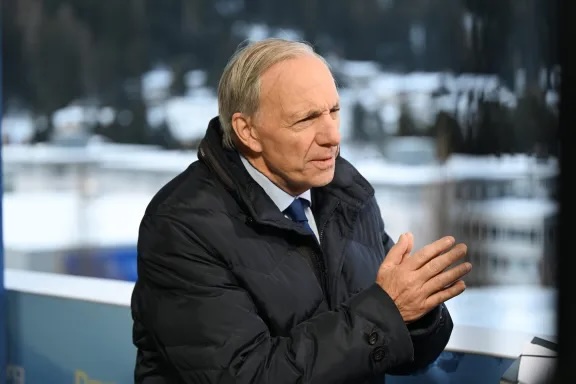
At Davos 2026, senior financiers and policymakers shifted their focus away from growth narratives and market optimism and directed sustained attention toward the condition of money itself. Discussions centered on reserve behavior, capital allocation, and confidence in fiat systems rather than short term equity performance. This change in emphasis reflected a deeper anxiety about the durability of the monetary order that has favored the United States for decades. Ray Dalio, founder of Bridgewater Associates, articulated this unease by framing the moment as one of misunderstanding rather than awareness. Dalio stated, “I don’t even think people think capital war. They hear a lot about a trade war.”
Capital Conflict Replaces Commercial Rivalry
Dalio described global tension as a financial struggle rooted in ownership and capital flows rather than tariffs or supply chains. He presented trade imbalances as symptoms of deeper distortions that reshape who controls assets and currency reserves. This argument placed monetary power at the center of geopolitical competition and removed comfort from familiar trade narratives. Dalio explained the mechanism directly when he said, “The big issue is the opposite side of a trade imbalance is a capital imbalance.” He reinforced the warning by adding, “We haven’t begun the capital war yet.”
What is Capital Conflict?
Capital conflict means countries compete over money and ownership rather than land or trade goods. Governments use currencies, debt, sanctions, and reserve assets to gain leverage over rivals. This struggle happens quietly through banks, bond markets, and central bank decisions rather than through armies. People often feel its effects through inflation, higher prices, or weaker currencies without seeing the conflict directly.
Central Banks Signal Distrust Through Reserves
Actions taken by central banks provided tangible evidence of shifting confidence in traditional reserve assets. Monetary authorities adjusted holdings away from sovereign bonds and moved capital into assets viewed as independent from political discretion. Dalio pointed to this behavior as a quiet referendum on fiat credibility rather than a speculative trend. He said, “So central banks buying gold and replacing bonds and other assets, we see these things happening.” Dalio clarified the meaning of gold price increases by stating, “Gold being up 67%, it’s not a precious metal that goes up 60%. It was bought by central banks.”
Fiat Currency and the Weight of Monetized Debt
Dalio traced declining trust in money to the structure of modern fiat systems that rely on sustained debt creation. He described these currencies as claims tied directly to government liabilities rather than independent stores of value. This framework linked monetary fragility to political decision making and fiscal expansion. Dalio summarized this view with precision when he said, “Fiat currencies, which are essentially debt instruments that get monetized.” His description framed the dollar as vulnerable to policy choices rather than anchored strength.
Repeated Breaks in the Monetary Order
Historical context reinforced Dalio’s argument that the current moment fits a recurring pattern. He referenced prior structural failures that reshaped global money arrangements and altered confidence in leading currencies. Each episode relied on increased leverage and monetary intervention rather than restraint. Dalio recalled one such moment directly by stating, “There was a breakdown in 1971.” He followed that reference with a modern parallel, saying, “We go to quantitative easing, in other words, debt monetization.”
Geopolitics and the Rejection of Foreign Debt
Dalio emphasized that strategic rivalry alters how nations assess reserve assets and sovereign obligations. Governments now view foreign debt through a lens shaped by sanctions risk and political leverage. This shift reduces willingness to hold assets issued by rival powers. Dalio stated the concern plainly when he said, “Countries do not like to hold each other’s debt.” He connected that reluctance to coercive tools by adding, “They worry that some other country will sanction them.”
Markets Ignore the Money Question
Dalio argued that investor attention remains concentrated on asset prices rather than monetary integrity. He suggested that this imbalance distorts public understanding of financial risk. Equity enthusiasm diverted focus from currency stability and purchasing power. Dalio expressed this criticism directly when he said, “I think they’re missing the value of money question.” He contrasted priorities by adding, “It was even bigger story than the tech stock story.”
Debt Dynamics and Inflationary Illusions
Dalio warned that rising debt service obligations pressure governments into choices that erode currency value. He rejected predictions of immediate collapse yet cautioned against complacency. Inflationary asset appreciation can mask systemic weakness and delay recognition. Dalio addressed expectations clearly when he said, “I don’t think we’re going to see a meltdown.” He followed that assessment with a warning, stating, “You almost could see a melt up.”
Dollar Confidence Under Political Conditions
Dalio concluded his Davos remarks by linking currency confidence to restraint in geopolitical action. He argued that military escalation would alter reserve demand and capital flows without delay. This connection placed foreign policy decisions inside financial risk calculations. Dalio warned explicitly about the consequences of escalation when he said, “If you cross that line like military action in Greenland would change in important ways the demand for those assets.” His assessment framed dollar dominance as conditional rather than permanent.
Exposing the Fragility Beneath Dollar Dominance
The discussions at Davos 2026 revealed a monetary system sustained by habit rather than conviction. Central bank behavior, debt accumulation, and geopolitical tension converged around doubts rarely expressed in public forums. Dalio’s remarks exposed how capital flows already respond to these pressures without formal announcements. His warnings described a system vulnerable to political decisions and historical repetition. The essence of the debate showed a reserve currency that persists through inertia even as confidence erodes beneath the surface.
