
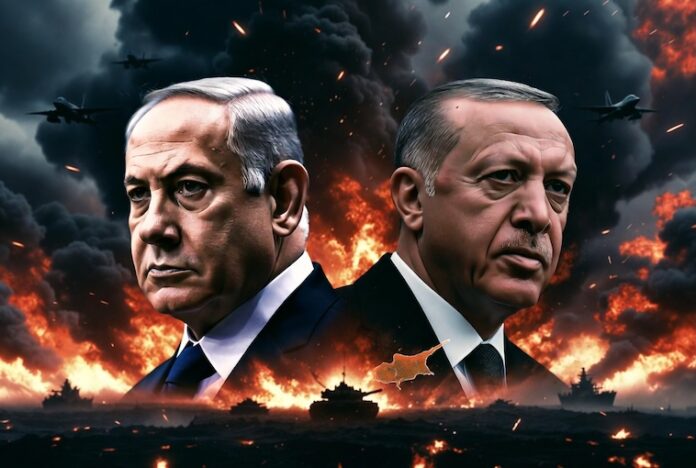
Israel Signals a Strategic Shift After Iran
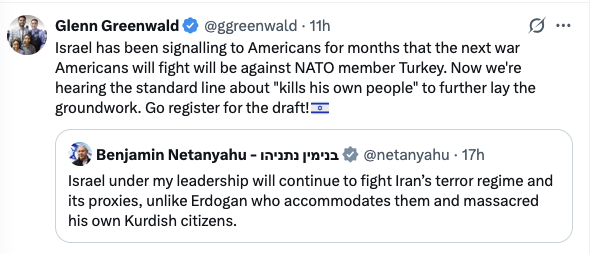
Israel’s latest public messaging toward Turkey marks a turning point that demands close attention from policymakers and regional observers across multiple capitals today. Prime Minister Benjamin Netanyahu issued a sharp public accusation against Recep Tayyip Erdogan on April 11, 2026, charging that he accommodates Iranian proxies and massacres Kurdish citizens within his borders. That accusation moved beyond routine diplomatic friction and signaled a deeper strategic intent that many interpret as preparation for future confrontation. Journalist Glenn Greenwald captured this shift with a pointed observation, stating, “Israel has been signalling to Americans for months that the next war Americans will fight will be against NATO member Turkey.” Greenwald added that officials now repeat familiar language about leaders who kill their own people, which functions as groundwork for broader public acceptance of escalation.
Israel Identifies Turkey as the Next Strategic Target
Israel’s leadership has begun to frame Turkey as a successor threat following heightened tensions with Iran, and that framing has circulated across policy discussions. Former Prime Minister Naftali Bennett expressed this position directly with the statement, “Turkey is the new Iran,” which gained traction across diplomatic and media channels. That statement shapes a narrative that positions Ankara as a central obstacle to Israeli regional objectives and security calculations. Public remarks from Israeli officials and widely circulated commentary place focus on Turkish military deployments across northern Syria. These statements collectively present Ankara as a state whose regional posture conflicts with Israeli strategic aims.
Northern Syria Defines a Direct Security Friction Zone
Northern Syria now represents a focal point where Turkish military presence intersects with Israeli strategic priorities in a direct and visible manner. Turkey maintains active positions across this region, and those positions extend influence across key transit corridors and contested territories. Israeli statements and published commentary describe these deployments as a challenge that threatens operational flexibility and long term regional positioning. A sequence of public remarks from Israeli leadership places Turkey within a line of adversaries that follow earlier confrontations and ongoing tensions. This sequence signals a structured approach that identifies and isolates perceived threats over time.
Northern Cyprus Emerges as a Strategic Flashpoint
Northern Cyprus has become another central issue that shapes Israeli and Turkish strategic calculations within the eastern Mediterranean environment. Turkey’s control over this territory creates friction with Israeli energy partnerships that involve Greece and Egypt across nearby maritime zones. These partnerships reflect a broader effort to establish influence over energy routes that carry economic and geopolitical significance. Official positions from the United Kingdom and long standing policy alignment on Mediterranean energy routes point toward support for initiatives that limit Turkish influence across Cyprus. This alignment positions London as a consistent supporter of actions that challenge Ankara’s presence in the region.
Western Alignment Signals Growing Support for Cyprus Operations
Western governments have begun to signal positions that suggest alignment with Israeli objectives in Cyprus while maintaining a measured approach toward Syria. The United States shows readiness to support Cyprus focused initiatives that align with energy interests and alliance balancing considerations. Syria presents a more complex environment, yet established diplomatic engagement between Israeli and American officials provides avenues for persuasion and alignment. Public commentary from former officials and policy figures highlights the role of these channels in shaping outcomes within Washington’s decision making processes. These statements indicate that policy direction can shift when strategic priorities align across both governments.
NATO Membership Creates a Structural Barrier to Escalation
Turkey’s membership in the North Atlantic Treaty Organization introduces a structural constraint that complicates any direct confrontation involving Israel and its Western partners. Article 5 obligations require collective defense, which would place Washington in a position that demands support for Ankara in a direct conflict scenario. This requirement creates a contradiction between alliance commitments and strategic alignment with Israel. Former intelligence official Joe Kent addressed this contradiction with a direct statement, asserting that the United States will leave NATO to stand with Israel in a future clash involving Turkey. Repeated public statements from multiple political and media figures present this conclusion as a developing line of argument within current discourse.
Strategic Calculations Point Toward a Potential Alliance Shift
These developments create a strategic environment where Turkey faces increasing pressure to reassess its position within existing alliances and partnerships. The possibility of a weakened NATO framework alters the balance of guarantees that Ankara has relied upon for decades. Public statements and widely circulated commentary frame current signals as preparation for a shift that could leave Turkey exposed to coordinated pressure without automatic Western military backing. This scenario drives consideration of alternative alignments that could offset emerging risks. One such option involves closer coordination with Iran, which offers complementary military capabilities and shared opposition to regional pressure from external actors.
Greater Israel Project Drives Regional Expansion
Israeli officials pursue the Greater Israel vision as an open strategic objective that has guided regional actions since October 7, 2023, across multiple theaters. Israel has conducted operations across Gaza, Lebanon, Syria, Yemen, and Iran, and each campaign has moved forward with consistent protection from Washington throughout this period. Prime Minister Benjamin Netanyahu described this project in August 2025 as a historic and spiritual mission, while Bezalel Smotrich announced border expansions into Gaza, Lebanon, and Syria on April 9, 2026. These statements present a pattern in which leadership captures land from neighboring states and neutralizes perceived threats in pursuit of expanded territorial control. This pattern now shapes regional alignment and places pressure on surrounding capitals that face what appears to be the next phase of this strategy.
