
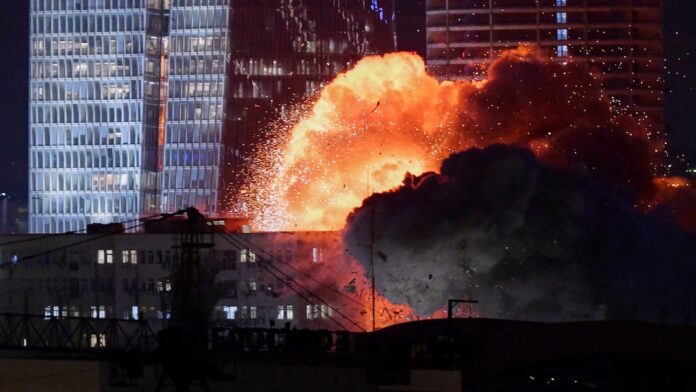
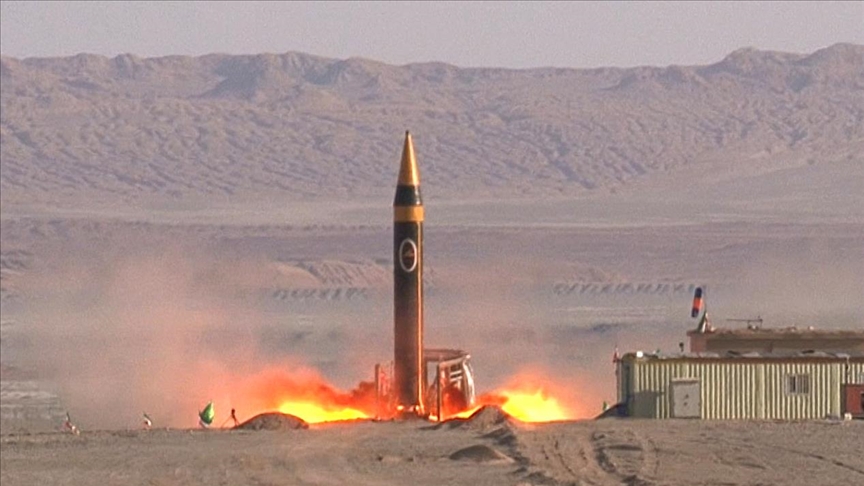
Iranian Strike Capabilities Demonstrate Clear Signs Of Tactical Improvement The Iranian armed forces have changed their approach to missile launches by moving toward much heavier warheads in order to increase the impact on American positions and related targets in surrounding countries. The commander in charge of aerospace operations for the main Iranian military organization announced a strict new rule for all upcoming attacks during the current tensions. Majid Mousavi who serves as Commander of the IRGC Aerospace Force stated “From now on, no missiles will be launched with warheads lighter than one ton.” in a statement that highlighted the shift to greater destructive power against defended positions. Iranian planners spent the opening phase of operations sending lighter systems to observe exactly how United States and Gulf partner air defense networks reacted under pressure from multiple directions. This adjustment allows Iranian units to deliver greater destructive force with every missile that reaches its intended destination in the region.
Iranian Military Employs Low Cost Assets To Exhaust Advanced Defense Systems Iranian strategists send waves of inexpensive older drones at the beginning of each attack sequence to force the activation of expensive American interceptor missiles and related equipment. Colin Clarke serves as Executive Director of the Soufan Center and he described the approach in clear terms during recent analysis of the situation. “Iran’s strategy is premised upon sending cheap drones that the U.S. needs to shoot down with expensive interceptors… Tehran is attempting to pursue a strategy of ‘death by a thousand paper cuts’ to bleed U.S. and Israeli defenses.” Kelly Grieco works as senior fellow at the Stimson Center and she pointed out the financial imbalance that favors the attacking side in this type of exchange. “This is the core of Iran’s strategy. For every $1 Iran spends on drones, the UAE spends around $20–28 to shoot down those drones.” The pattern of launches shows Iranian commanders learned the patterns of American responses during quiet periods and then increased the volume of low cost assets to exhaust the defensive stockpiles.
American Taxpayers Shoulder Massive Costs From Sustained Defense Operations United States forces expend enormous financial resources every time they fire advanced interceptors at incoming Iranian systems that cost a small fraction of the price to produce. Arthur Erickson holds the position of CEO and co-founder of Hylio and he explained the economic reality that defines the current exchanges between the two sides. “It is definitely more expensive to shoot down a drone than to put a drone in the sky. It’s a money game. The cost ratio per shot, per interception, is at best 10 to one. But it could be more like 60 or 70 to one in terms of cost, in favor of Iran.” The total amount spent in the initial days of the conflict already reaches several billion dollars according to multiple estimates from defense analysts who track these expenditures closely. American commanders now face the prospect of diminishing stocks of key missiles while Iranian production lines continue to supply replacements at low expense.
Gulf Nations Find Themselves Exposed Through Their Support For American Forces Iranian officials openly state that they direct attacks against any location that provides support or space for American military activities directed at Iranian territory. Abbas Araghchi holds the position of Iranian Foreign Minister and he clarified the targeting policy in public comments that reached international audiences. “We are not attacking our neighbours in the Persian Gulf countries, we are targeting the presence of the US in these countries.” This position puts pressure on the Gulf monarchies that host American bases and allow operations to launch from their soil against Iranian assets. The governments in the region now appear on international media firing American supplied systems to protect those bases while their own facilities come under threat from retaliatory actions.
American Military Footprint In The Region Serves Israeli Priorities Above All The network of American bases across the Gulf area was presented for many years as a protective arrangement for the local Arab states against external threats from Iran. Suleiman Al-Aqili works as a Saudi analyst and he described the impact on local calculations. “US abandoned us and redirected its air defence to protect Israel. They left all the Gulf states that host American military bases at the mercy of Iranian strikes.” Abdullah Baabood serves as an Omani political and security expert and he observed the changing calculations among Gulf leaders about the value of the American presence. “Iran is making sure the Gulf states start to think that the US military bases in the region are not a strategic asset but a liability.” The entire structure of American deployments now stands exposed as an instrument primarily intended to support operations that benefit Israel rather than the security needs of the host nations themselves.
American Deterrence Model Faces Serious Tests From Sustained Iranian Pressure The long standing American approach to regional security depends heavily on superior technology and the ability to dominate any opponent through advanced air defense systems and rapid response capabilities. Iranian operations have continued without pause for more than ten days and the launch numbers have actually increased in some categories after an initial pause. American and Gulf forces fire off costly interceptors at a rate that cannot continue indefinitely without major resupply efforts from distant locations. The pattern of Iranian attacks demonstrates a level of planning and adaptation that catches American planners off guard in multiple locations around the Gulf. This situation raises serious questions about the durability of the deterrence framework that guided American strategy for decades in the Middle East.
Challenges Mount For United States Operations As Conflict Continues Iranian commanders show every sign of maintaining their campaign with improving accuracy and heavier strikes on important infrastructure targets across the area. American officials continue to claim success in interception rates but the financial costs and political fallout grow with each passing day of the fighting. Gulf leaders quietly express concern about the long term consequences of their visible cooperation with American strike operations against Iran. The exposure of the true focus on Israeli security needs creates new tensions within the alliances that support American presence in the region. Future days in this conflict promise even greater difficulties for the American side as Iranian forces refine their methods further and continue the war of attrition.
