
WASHINGTON — When President Trump announced late Sunday that a “highly respected Colonel” had been safely extracted from Iranian territory after his F-15E Strike Eagle was shot down, the White House presented the episode as a stirring vindication of American air superiority and military ingenuity.
The story was cinematic in its details: a wounded weapons-systems officer hiking a 7,000-foot ridgeline in the Zagros Mountains, MQ-9 Reaper drones providing lethal overwatch, and a daring special-operations insertion that seized an abandoned airstrip deep inside Iran to bring the airman home. Not a single American, the president insisted, was killed or even seriously wounded.
But a reconstruction of the operation’s timeline, geography and equipment — drawn from open-source intelligence, Iranian video and photographs, and the logistical realities of modern special-operations warfare — suggests the rescue narrative was a hastily constructed cover for a far more ambitious and ultimately disastrous mission: an attempt by American commandos to seize a cache of Iran’s enriched uranium near the nuclear complex at Isfahan.
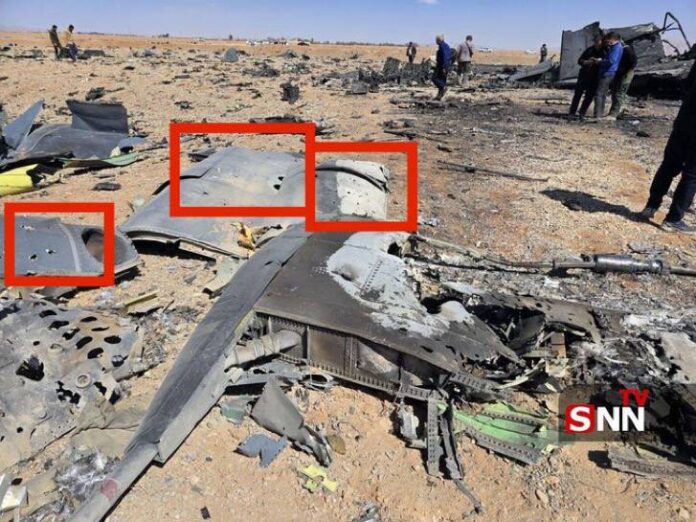
The operation’s scale was never in doubt. Iranian television and social media released footage and still images showing the burned wreckage of at least two MC-130J Commando II transports and several MH-6 Little Bird assault helicopters at a remote dirt strip roughly 50 kilometers from Isfahan. The aircraft were not simply abandoned; they appeared to have been deliberately scuttled. Iranian officials claimed their forces had destroyed the American aircraft; American officials said the crews had set demolition charges to keep sensitive equipment from falling into enemy hands.
Either way, the force package was wildly disproportionate for a combat search-and-rescue mission. Standard C.S.A.R. doctrine calls for one or two HH-60 Pave Hawk helicopters, a small team of pararescuemen, and perhaps an HC-130 fueler for extended range. Instead, the United States inserted a company-size element of special operators — more than 100 troops — supported by heavy-lift transports capable of carrying both helicopters and large numbers of personnel. That is the precise configuration used for direct-action raids, not for plucking a lone aviator from a mountainside.
The geography tells the same story. The F-15E wreckage was geolocated to a barren site south of Isfahan — the heart of Iran’s nuclear infrastructure and home to one of the country’s most heavily protected underground enrichment facilities. The “abandoned airport” used as a forward staging base sat within easy striking distance of those same sites. American planners had long discussed the possibility of seizing enriched uranium to deny Iran a rapid “breakout” capability should the conflict escalate.
According to analysts who have pieced together the sequence from public data, the mission unfolded in three distinct phases. On the evening of April 2, an F-15E from the 494th Tactical Fighter Squadron was downed while attempting to suppress Iranian air defenses in preparation for the planned raid. The following night, April 3–4, smaller helicopter teams conducted what appears to have been the actual recovery of the pilot and weapons-systems officer under cover of darkness.
Then, on the night of April 4–5, the larger special-operations force inserted via MC-130s and C-295 transports. Iranian drones, already hunting for the missing American airman, almost certainly detected the noisy, low-altitude arrival. Iranian troops converged quickly. The raid was aborted almost immediately. The Americans scuttled two of the transports and an unknown number of Little Birds before withdrawing in the remaining aircraft.
The rescue story was retrofitted within hours. It explained the sudden appearance of heavy American air and ground assets near a nuclear site, the loss of expensive equipment, and the need for an urgent extraction. It also spared the administration the humiliation of admitting that a high-risk nuclear materials raid had been detected and repelled before it could even begin.
Senior military officials had reportedly warned against the operation. On April 2, the same day the F-15E went down, Defense Secretary Pete Hegseth fired the Army’s top general, citing a poor “fit” for the job. Several other senior officers were also relieved. The timing, analysts noted, was not coincidental.
The White House has offered no public evidence — no photographs of the rescued colonel, no cockpit video, no after-action footage — to support its account. The colonel himself remains unidentified. In an era when the Pentagon routinely releases helmet-cam imagery of successful raids, the silence is telling.
Iran, for its part, has seized on the wreckage as proof of American overreach. State television broadcast images of twisted propeller blades and scorched fuselages, evidence, officials said, that the aircraft were destroyed on the ground by Iranian forces rather than deliberately scuttled after a successful mission.
The episode is already being compared, in scale if not in outcome, to the failed 1980 hostage-rescue mission in Iran known as Operation Eagle Claw — another case in which ambitious special-operations planning collided with harsh operational reality.
Whether the United States will acknowledge the true nature of the mission remains unclear. For now, the official line holds: a pilot was rescued, air dominance was demonstrated, and America suffered no losses. But the physical evidence on the ground outside Isfahan tells a different story — one of a high-stakes gamble that failed, and of a cover story constructed to conceal it.
Additional reporting was contributed by Thought Smash’s visual investigations team and open-source analysts who reviewed satellite imagery and social-media video.
