

Israeli Strategy and Developments
Israeli Prime Minister Benjamin Netanyahu announced on Sunday that the ongoing intense fighting with Hamas will soon shift focus. He indicated that some Israeli forces will be redeployed to the north, although the campaign against Hamas in Gaza will continue with more targeted operations. Netanyahu emphasized that any agreement with Hamas would not lead to a complete ceasefire or the end of the conflict. He expressed a willingness to negotiate a partial deal to secure the release of some Israeli hostages but stressed that the ultimate goal remains the eradication of Hamas.
U.S. Diplomatic Efforts
In a related development, the United States dispatched its energy specialist, Amos Hochstein (born in Israel and former IDF soldier), to Israel in an effort to dissuade the country from launching an all-out attack on Hezbollah in Lebanon. According to Reuters, the U.S. is concerned that a war in Lebanon would be difficult for Israel to win and could draw the U.S. military into a more active role. Hochstein conveyed President Biden’s desire to avoid further escalation, a sentiment echoed by the Pentagon. However, his efforts seem to have had limited success, as Israeli forces killed several Hezbollah fighters shortly after his visit.
Hezbollah’s Position
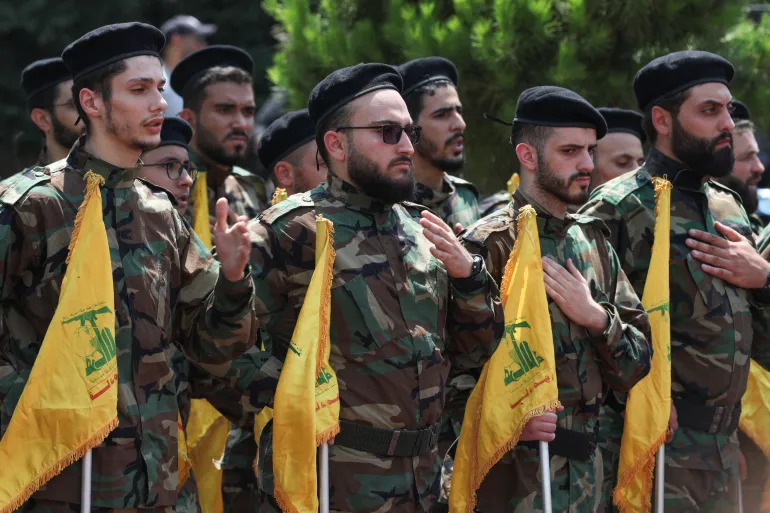
Hezbollah has been actively trying to avoid a full-scale war with Israel. The group released a video showcasing its surveillance capabilities over Israel, hoping to deter further Israeli aggression. Hezbollah leader Hassan Nasrallah also warned of new weapons that could target deeper inside Israel. He reiterated that a ceasefire in Gaza would halt the border conflict between Lebanon and Israel, as well as attacks from allied groups in Yemen and Iraq.
Military Preparations
Despite diplomatic efforts, preparations for a potential Israeli offensive in Lebanon are underway. Plans have been approved, and forces are being relocated from Gaza to the north. The U.S. envoy’s visit did not convince Israeli leaders to refrain from engaging Hezbollah, and there are indications that the U.S. may support an Israeli offensive if diplomatic solutions fail.
Potential Consequences
The possibility of an Israeli offensive into Lebanon raises significant concerns. The top U.S. military officer warned that such an action could provoke an Iranian response in defense of Hezbollah, potentially triggering a broader regional conflict. The U.S. continues to urge restraint and seek diplomatic solutions to prevent the escalation of hostilities.
Israeli Preparations and Diplomatic Challenges
Israeli preparations for war in Lebanon are practically underway. The plan has been approved, and preparations on the ground have started, including the relocation of forces from Gaza to the north. This indicates a serious intent by Israel to engage Hezbollah militarily.
The U.S. envoy, Amos Hochstein, who was an unusual choice given his background in the IDF, was unable to convince the Israeli leadership to avoid engaging Hezbollah. His remarks in Lebanon suggest that the Israelis may have persuaded him of their reasons to engage Hezbollah. This situation highlights the split within the U.S. government. U.S. Air Force General C.Q. Brown, chairman of the Joint Chiefs of Staff, warned Israel against proceeding with its plans, reflecting internal disagreements on how to handle the situation.
Is there a Split Within the U.S. Government for Supporting Israel?
There is a significant split within the U.S. government regarding support for Israel’s ongoing war in the Middle East. The U.S. military, led by figures such as U.S. Air Force General C.Q. Brown, has expressed strong opposition to participating in any new military efforts in the region. In contrast, the State Department appears to be more supportive of Israel’s actions, allowing the country to continue its aggressive military path. This division highlights the internal disagreements and differing perspectives on how to handle the escalating conflict involving Israel.
