August 28, 2024
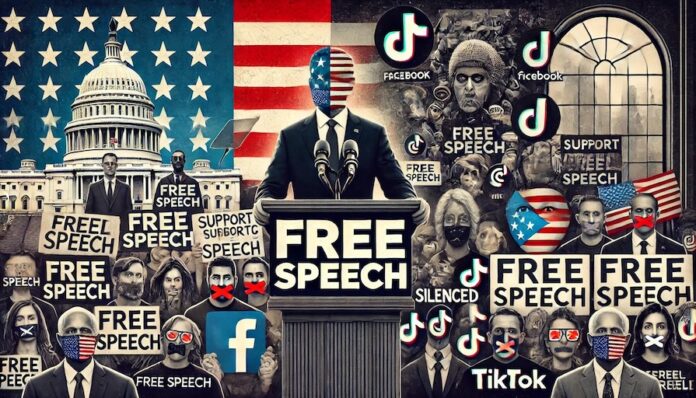
Free speech stands as a celebrated pillar of Western democracy. Politicians, scholars, and activists emphasize the importance of protecting the right to express opinions without fear of retribution. Yet, this proclaimed commitment to free speech reveals its fragility when scrutinized. Western governments, particularly the United States, frequently exhibit a contradictory stance that exposes deep-seated hypocrisy.
The Selective Protection of Free Speech
The United States demonstrates a selective approach to free speech. The nation claims to champion the right to criticize and protest against various issues, but this support evaporates when critiques target its foreign policy or allies. Discussions on Israel and the conflict in Gaza provide a glaring example of this selective censorship. American citizens supposedly have the right to question their government’s involvement in foreign conflicts, especially when taxpayer money and resources are involved. However, those who voice opposition to U.S. support of Israel or military actions in Gaza frequently face increased restrictions.
Multiple instances highlight this selective censorship. Social media platforms, influenced by political interests, have banned or limited accounts expressing solidarity with Palestinians or criticizing Israeli policies. For example, Columbia University’s Students for Justice in Palestine faced multiple bans and had their accounts deleted. This censorship exposes the inconsistency in the West’s stance on free speech. If a university group cannot discuss international policies without fear of censorship, the claim of robust free expression in the West rings hollow.
Double Standards in Defining Hate Speech
The use of “hate speech” as a justification for silencing dissent further exposes hypocrisy. Right-wing groups or individuals expressing controversial or offensive views often receive swift protection under free speech principles. The argument revolves around the idea that suppressing speech—even speech considered objectionable—sets a dangerous precedent that could lead to broader censorship. Yet, this rationale vanishes when speech targets Israeli actions or advocates for Palestinian rights.
Western governments and institutions frequently apply the label of “hate speech” selectively. Criticism of Israel is often quickly classified under this term, suggesting that such speech poses a unique danger justifying censorship. This approach mirrors the arguments used to suppress other forms of speech deemed undesirable by those in power, whether political dissent or expressions of social and cultural views. The inconsistency becomes evident when examining how different forms of speech are treated under similar conditions, revealing a clear double standard.
Government and Corporate Roles in Censorship
Governments and corporations actively contribute to these double standards. State governors in the U.S., such as Ron DeSantis and Greg Abbott, have issued executive orders restricting pro-Palestinian activities on college campuses. These orders claim to prevent “material support for terrorism,” a vague justification that conflates political dissent with violent extremism. This argument collapses under scrutiny, as it criminalizes expressions of support or criticism that are part of a healthy political discourse.
Corporate America has also contributed to this trend. Several Wall Street law firms screen job applicants based on their participation in protests against Israeli actions. This practice mirrors McCarthy-era blacklistings and suggests a worrying trend toward punitive measures for exercising constitutional rights. Such actions undermine the principles of free speech and deter individuals from engaging in protest and dissent, eroding democratic values.
Social Media’s Influence on Political Speech
Social media platforms, once seen as havens for free speech, have increasingly become tools for political control. Lobbying and political pressure heavily influence these platforms. Companies like Meta and TikTok have altered their policies to censor content critical of Israel, often under the guise of preventing hate speech or maintaining “community standards.” These policies disproportionately target specific viewpoints, revealing a clear bias in what is considered acceptable.
Meta’s decision to remove content targeting “Zionists,” not based on explicit hate speech but perceived as a proxy for anti-Semitism, shows this selective regulation. Zionism, a political ideology distinct from Judaism as a religion, is often conflated with anti-Semitism when criticized. This stifles legitimate debate on a political topic and demonstrates a readiness to suppress specific viewpoints to maintain a political narrative.
The Facade of Democracy and Free Speech
The actions of Western governments and corporations reveal a façade of free speech and democracy. Suppressing speech based on content rather than its nature as free expression exposes the hollowness of democratic claims. In theory, the West promotes an open marketplace of ideas, but in practice, governments, corporations, and social media platforms selectively censor speech, distorting public discourse.
This practice demonstrates that the commitment to free speech is a selective and conditional one, only upheld when convenient or politically expedient. The pretense of free expression collapses under the weight of these contradictions, revealing the West’s true priorities: maintaining control over the narrative and protecting its interests at the expense of genuine freedom of speech.
Exposing the True Nature of Western Free Speech
The West’s professed dedication to free speech is not absolute. The selective application of free speech protections, especially regarding criticism of Israel and support for Palestine, exposes a deep-seated hypocrisy. By selectively silencing voices and manipulating public discourse, the West reveals its true colors. The narrative of democracy and free speech serves as a convenient shield, hiding the reality of control, censorship, and suppression of dissenting voices.
