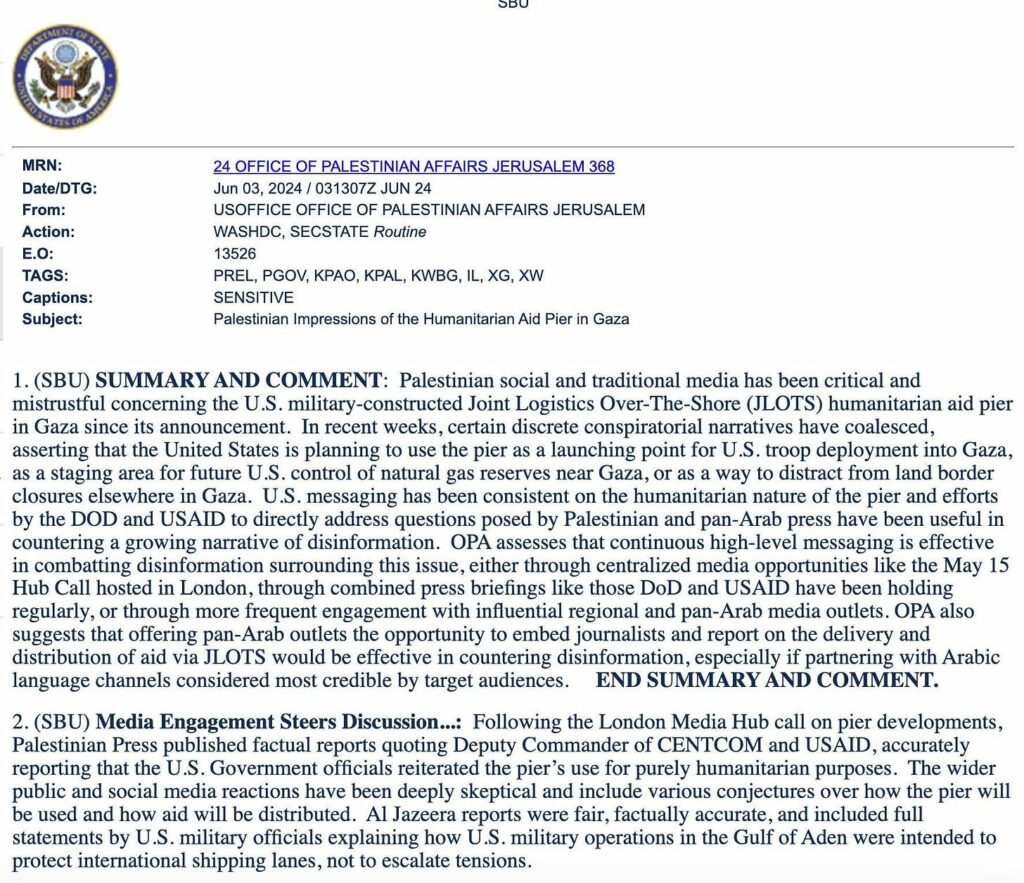
The recent diplomatic cable leak has sparked significant concerns about the United States’ involvement in Gaza. The cable dismisses Palestinian fears as “disinformation” yet provides evidence suggesting a U.S. military presence. This contradiction raises a fundamental question: why should the people of Gaza trust America, whose weapons have devastated their lives?
The Biden administration’s dismissive tone towards Palestinian fears highlights a severe disconnect. The cable, sent from the U.S. Embassy in Jerusalem to the Secretary of State, acknowledges Palestinian suspicions about U.S. military intentions. It labels these suspicions as “conspiratorial narratives,” failing to recognize the legitimate fears of a population under constant threat. The U.S. government’s narrative overlooks the destruction caused by American-made weapons in Gaza, making its claims of humanitarian motives appear hollow.
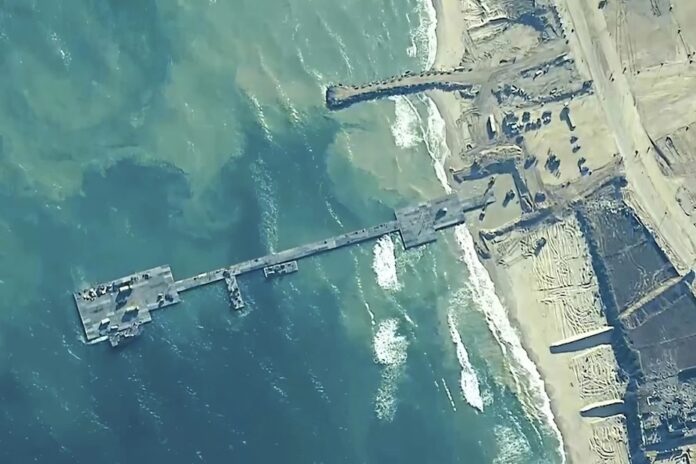
The U.S. Embassy’s cable mentions American air defense and counter-drone weapons “positioned on land” yet fails to clarify whether this land is in Gaza. This ambiguity fuels mistrust. The presence of U.S. troops injured during the construction of the Joint Logistics Over-The-Shore (JLOTS) humanitarian aid pier further complicates the narrative. The Embassy’s attempt to dismiss fears as baseless only underscores its contradictory stance. The people of Gaza, witnessing the deployment of U.S. military equipment, have every reason to question the true intentions behind these actions.
The diplomatic cable reveals that Palestinian social media has been critical of the U.S. military-constructed aid pier since its announcement. The Embassy attributes this criticism to “disinformation,” ignoring the historical context of U.S. involvement in the region. The mention of an “American anti-drone-system positioned on land near the pier” confirms the presence of military hardware, contradicting the U.S. narrative of purely humanitarian intentions. This inconsistency highlights a deeper issue: the U.S. government’s failure to acknowledge its role in perpetuating fear and mistrust.
The cable’s discussion of “disinformation” circulating on Palestinian social media about the U.S. military’s “hidden agenda” is telling. The Pentagon has confirmed the presence of counter-rocket, artillery, and mortar systems (C-RAM) in Gaza. Despite this, the cable dismisses these fears as mere conspiracy theories. The people of Gaza, bombarded by American-made weapons, are justified in their skepticism. The U.S. government’s narrative of humanitarian aid is undermined by the very presence of military equipment on the ground.
The diplomatic cable’s lack of introspection is striking. Instead of addressing the legitimate concerns of the people of Gaza, the U.S. government dismisses their fears as “disinformation.” The Embassy’s insistence on the humanitarian nature of the pier ignores the historical and ongoing impact of U.S. military actions in the region. The cable’s authors fail to recognize the contradiction in their messaging: while denying the presence of “boots on the ground,” they acknowledge U.S. personnel’s operation of military equipment.
The broader issue of the U.S. government’s obsession with disinformation is also at play. By framing the problem as misinformation, the government avoids addressing its role in creating these fears. The focus on fact-checking and countering falsehoods blinds the administration to the reality of its actions. The people of Gaza, who have endured the destruction wrought by American-made weapons, have every right to question the true intentions behind U.S. involvement.
The diplomatic cable leak reveals a profound disconnect between the U.S. government’s narrative and the reality on the ground in Gaza. The dismissal of Palestinian fears as “disinformation” fails to acknowledge the legitimate concerns of a population under siege. U.S. military equipment’s presence contradicts the humanitarian aid narrative, fueling mistrust and skepticism.