
Nationwide Protests and Government Response
Thousands of university students in Bangladesh protest against inequality, poverty, and lack of job security. The government’s response includes shutting down the nation’s internet service to prevent further student organizing. This drastic measure highlights the desperation of Prime Minister Sheikh Hasina’s administration to maintain control.
Internet Shutdown and Government Justification
On Thursday, junior telecommunications minister Zunaid Ahmed Palak announced the nationwide shutdown of the mobile internet network. He claimed the action aimed to “ensure the security of citizens.” However, critics argue that this is another move to suppress dissent and stifle the students’ voices.
Escalating Violence and Government Tactics
The unrest, which began at the start of the month, escalated as university students demanded the removal of quotas in government jobs. Following the High Court’s ruling in June, 56 percent of government jobs are now reserved for specific groups, including descendants of freedom fighters, women, and people from “backward districts.” This quota system sparked chaos, leading to violent clashes between student protesters, police, and members of the Bangladesh Chhatra League (BCL), the student wing of the ruling party.
Casualties and Rising Tensions
The protests have turned deadly, with dozens of people killed and thousands injured. Authorities have responded with force, using tear gas and rubber bullets to disperse crowds. Social media and news reports have shown shocking footage of the violence, highlighting the severe crackdown on students.
Government’s Use of Internet Blackout for Violent Crackdowns
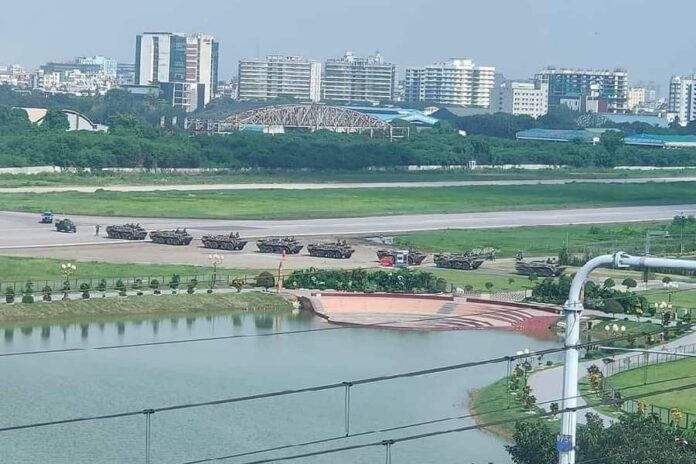
The government’s internet blackout has enabled violent crackdowns on nonviolent protesters. Reports indicate that the police and military are conducting massacres on the civilian population. Military tanks have been deployed to confront peaceful college students, turning the streets into zones of conflict. This heavy-handed approach has led to significant casualties and widespread fear among the population.
Role of the Opposition and External Reactions
The government’s actions have led to the arrest of many opposition party leaders and activists who expressed support for the student protesters. International reactions have been critical, with statements from the US Department of State, the United Nations, and Amnesty International condemning the violence and calling for restraint.
Future of the Protests and Government Stance
Prime Minister Sheikh Hasina has canceled planned trips to Spain and Brazil to address the crisis. The Supreme Court has suspended the quota reinstatement pending a hearing, but student protesters demand accountability and legal amendments against the quotas. Despite the government’s call for patience, the protesters remain skeptical of any promises made by the administration.
Continuing Unrest and Potential Outcomes
The ongoing student protests in Bangladesh highlight the deep-seated frustrations with the current government’s policies and economic conditions. The severe crackdown and internet blackout have failed to silence the voices of dissent.
